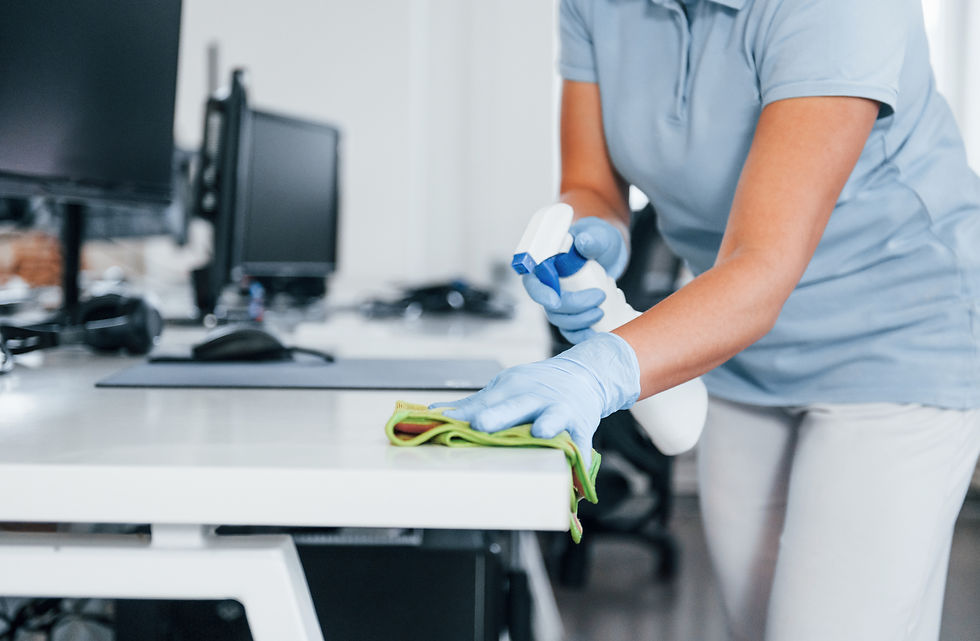
Difference Between Sanitizing and Cleaning
- IMPACT Access
- 20 hours ago
- 5 min read

What’s the Difference Between Sanitizing and Cleaning?
Understanding the difference between sanitizing and cleaning matters more than a lot of people realize. These terms are often used like they mean the same thing, but they don’t. Both are important, and both play a different role in keeping a home or business in good shape.
Cleaning removes visible dirt, dust, crumbs, residue, and buildup from surfaces. Sanitizing reduces bacteria and other contaminants on those surfaces to help create a more hygienic environment. One improves how a space looks and feels. The other helps address what you can’t always see.
According to the CDC, cleaning removes dirt and impurities from surfaces, while sanitizing reduces germs to levels considered safe, which is why both steps matter in a well-maintained home or workplace.
If you want a space that’s not just tidy, but truly well maintained, both matter.
What Cleaning Actually Does
Cleaning is the first step in maintaining any space properly. It focuses on removing the mess you can see, along with the buildup that collects through daily use.
That can include:
Dust on shelves and surfaces.
Dirt tracked in from outside.
Food residue on counters.
Smudges on glass.
Bathroom buildup.
Crumbs, spills, and grime on floors.
In homes, cleaning helps the space feel more manageable, comfortable, and cared for. In businesses, it helps maintain a more professional environment for employees, customers, and visitors.
A clean space makes a strong impression, but appearance is only part of the picture.
What Sanitizing Does
Sanitizing goes a step further. After a surface has been cleaned, sanitizing helps reduce germs and bacteria on high-touch areas and shared surfaces.
This is especially important in places like:
Kitchens.
Bathrooms.
Door handles.
Light switches.
Shared desks.
Breakroom counters.
Waiting areas.
Tables and other frequently touched surfaces.
Sanitizing supports a healthier environment, especially in busy homes and workplaces where multiple people are using the same spaces throughout the day.
The Main Difference Between Sanitizing and Cleaning
The simplest way to explain it is this:
Cleaning removes dirt and buildup.Sanitizing reduces germs on surfaces.
That means a surface can look clean but still need sanitizing. It also means sanitizing works best after the dirt and residue have already been removed.
Here’s a simple breakdown:
Cleaning | Sanitizing |
Removes visible dirt, dust, crumbs, and grime. | Reduces bacteria and contaminants on surfaces. |
Improves appearance and overall upkeep. | Supports hygiene in high-touch areas. |
Helps maintain comfort and order. | Helps create a healthier environment. |
Should happen regularly. | Should be used where hygiene matters most. |
The two aren’t interchangeable. They work together.
Why Cleaning Comes First
One of the biggest misunderstandings is thinking sanitizing can replace cleaning. It can’t.
If a counter, sink, desk, or table still has residue, dust, grease, or visible mess on it, sanitizing won’t be as effective. Surfaces need to be cleaned first so sanitizing can actually do its job.
That’s why a professional approach like we use at Mops & Muscles doesn’t skip steps. It starts with removing dirt and buildup, then addresses the areas that need a more hygienic finish.
This is one of the biggest differences between surface-level work and thorough professional cleaning. Done right means addressing both appearance and cleanliness in the right order.
Why Homes Need Both Cleaning and Sanitizing
For homeowners, regular cleaning keeps things under control. It helps the house look better, feel fresher, and stay easier to manage. But in high-use spaces, cleaning alone may not be enough.
Homes especially benefit from both cleaning and sanitizing in:
Kitchens.
Bathrooms.
Entry points.
Kids’ spaces.
Frequently touched shared surfaces.
For busy households, this matters because it supports both comfort and peace of mind. It’s not just about making the home look good for a day. It’s about keeping it consistently cared for in a way that feels reliable and thorough.
Why Businesses Need Both Too
In business settings, the difference between sanitizing and cleaning is just as important, if not more.
Offices, shared workspaces, waiting rooms, and commercial restrooms see constant use. Dirt builds up quickly, and so do germs on high-touch surfaces. If a space only looks clean but isn’t being maintained thoroughly, that can affect both presentation and confidence in the environment.
Businesses benefit from both because:
Cleaning keeps the workspace professional and presentable.
Sanitizing helps support hygiene in shared areas.
Both together help maintain a better experience for staff and visitors.
Consistent service shows attention to detail and professionalism.
A polished workspace matters. A properly maintained one matters even more.
When Cleaning Is Enough and When Sanitizing Should Be Added
Not every surface needs the same level of attention every time. Some areas need routine cleaning, while others need both cleaning and sanitizing on a regular basis.
Cleaning may be enough for:
Low-touch surfaces.
Decorative shelving.
Baseboards.
Routine floor care.
General dust removal.
Cleaning and sanitizing are especially important for:
Kitchen counters.
Bathroom surfaces.
Door handles.
Shared office equipment.
Breakroom tables.
High-touch household surfaces.
Common spaces used by multiple people.
A strong cleaning routine takes both into account instead of treating every area the same way.
Why Professional Service Makes a Difference
A lot of people know they want a cleaner space. What they often don’t know is how to consistently maintain it at a high standard.
That’s where professional service makes a difference.
A trained team knows:
Which surfaces need full cleaning first.
Which areas should be sanitized regularly.
How to work efficiently without rushing.
How to maintain quality over time.
How to create a more consistent result instead of a quick surface-level reset.
That consistency matters, especially for people who’ve dealt with rushed or unreliable cleaners in the past. A professional approach should leave your space looking better, feeling better, and actually being maintained with more care.
Cleaning and Sanitizing Work Best Together
If you’re trying to keep a home or business in excellent shape, the goal shouldn’t be choosing one or the other. The goal is understanding when each one matters.
Cleaning handles the visible mess. Sanitizing addresses the surfaces where hygiene matters most. Together, they create a cleaner, more comfortable, and better maintained environment.
That’s the real difference between sanitizing and cleaning, and it’s also why both should be part of a thoughtful, professional cleaning approach.
Need Professional Cleaning & Sanitizing? Contact Us Today!
If you want a home or business that feels truly cared for, Mops and Muscles is here to help. We take a thorough, professional approach to cleaning and sanitizing so your space doesn’t just look clean, it’s maintained the right way. Need Professional Cleaning & Sanitizing? Contact Us Today!
FAQs About the Difference Between Sanitizing and Cleaning
What is the difference between sanitizing and cleaning?
Cleaning removes visible dirt, dust, and buildup from surfaces. Sanitizing reduces bacteria and other contaminants on those surfaces.
Do you clean before sanitizing?
Yes. Cleaning should come first because dirt and residue can make sanitizing less effective.
Is sanitizing necessary in homes?
Yes, especially in high-touch areas like kitchens, bathrooms, doorknobs, and shared surfaces.
Why is sanitizing important in businesses?
Businesses have shared spaces and frequently touched surfaces that can collect germs quickly. Sanitizing helps support a healthier and more professional environment.
Is cleaning alone enough?
Cleaning is essential, but in many spaces, especially high-touch or shared areas, sanitizing should be part of the routine too.